The science
A hormone pathway, studied in tens of thousands of people.
GLP-1 and GIP are incretin hormones your gut releases when you eat; modern therapies are long-acting analogues of that signal. Here is what the trials found — and the honest limits.
Mechanism
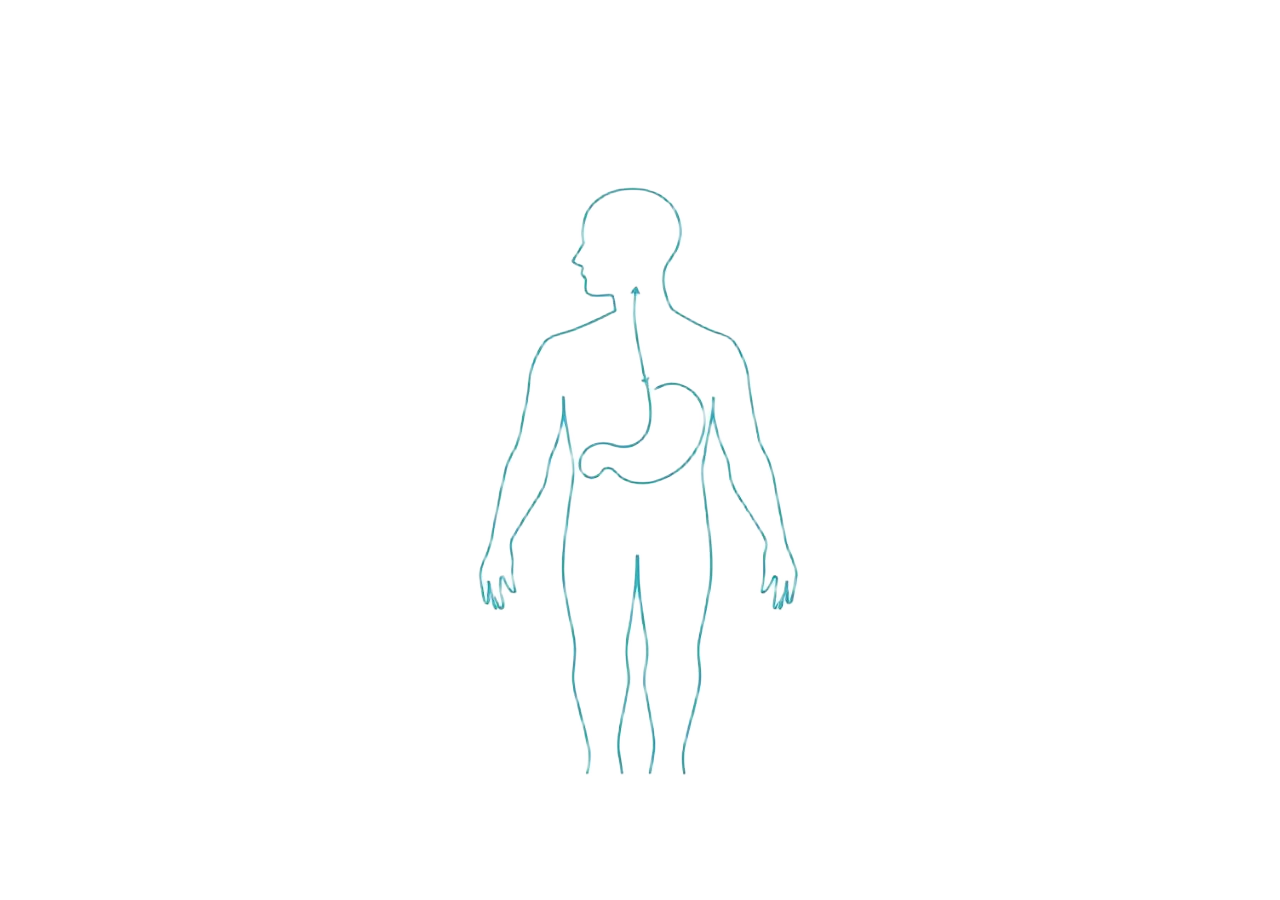
Four levers, one pathway.
Not stimulant-driven, not water: reduced energy intake from altered satiety signalling, plus better handling of what you do eat.
Appetite signalling
GLP-1 receptors in the hypothalamus and hindbrain reduce hunger drive and food-seeking behaviour. Patients describe it as the constant background 'food noise' going quiet.
Gastric emptying
Stomach contents empty more slowly, so a smaller meal produces the same fullness — and holds it for hours rather than minutes.
Glucose-dependent insulin release
Insulin is secreted in proportion to glucose load and glucagon is suppressed, flattening post-meal spikes without driving hypoglycaemia on its own.
GIP co-agonism (tirzepatide)
Adding GIP receptor activity improves insulin sensitivity in adipose tissue and appears to increase the magnitude of weight loss beyond GLP-1 alone.
Trial evidence
What the registration trials reported.
Mean results from randomised controlled trials — averages, not promises; roughly one in ten responds poorly.
SURMOUNT-1
−20.9% mean body weight
- Therapy
- Tirzepatide 15 mg
- Participants
- 2,539
- Duration
- 72 weeks
- Population
- Adults with obesity, without diabetes
SURMOUNT-2
−14.7% mean body weight
- Therapy
- Tirzepatide 15 mg
- Participants
- 938
- Duration
- 72 weeks
- Population
- Adults with obesity and type 2 diabetes
STEP 1
−14.9% mean body weight
- Therapy
- Semaglutide 2.4 mg
- Participants
- 1,961
- Duration
- 68 weeks
- Population
- Adults with overweight or obesity
STEP 8
−15.8% vs −6.4% (liraglutide)
- Therapy
- Semaglutide 2.4 mg
- Participants
- 338
- Duration
- 68 weeks
- Population
- Head-to-head comparison
SELECT
−20% major adverse cardiac events
- Therapy
- Semaglutide 2.4 mg
- Participants
- 17,604
- Duration
- 39.8 months
- Population
- Overweight/obesity with established CVD
SURMOUNT-OSA
−45% apnoea-hypopnoea index
- Therapy
- Tirzepatide
- Participants
- 469
- Duration
- 52 weeks
- Population
- Moderate-to-severe obstructive sleep apnoea
Sources: Jastreboff et al., NEJM 2022 (SURMOUNT-1)1; Garvey et al., Lancet 2023 (SURMOUNT-2)2; Wilding et al., NEJM 2021 (STEP 1)3; Rubino et al., JAMA 2022 (STEP 8)4; Lincoff et al., NEJM 2023 (SELECT)5; Malhotra et al., NEJM 2024 (SURMOUNT-OSA)6.
India context
Approvals, access and what changes in 2026.
Semaglutide and tirzepatide are approved by the Central Drugs Standard Control Organisation (DCGI) for weight management in defined populations, and are dispensed in India as Schedule H prescription medicines through licensed pharmacies.
South Asians develop metabolic disease at a lower BMI than Western populations, which is why Indian guidelines use overweight ≥ 23 kg/m² and obesity ≥ 25 kg/m² rather than 25 and 30. A person at 27 kg/m² with an irregular cycle and a fatty liver is a clinically different patient from the same BMI in a European cohort.
Semaglutide's Indian patent protection lapses in 2026, and multiple domestic manufacturers have filed generics. This is expected to reduce monthly therapy cost substantially — Zydus's Semaglyn already prices well below originator pens. Cheaper access makes clinical supervision more important, not less.
Metaboliq works only with DCGI-approved, licensed-pharmacy-dispensed products. We do not source compounded, imported grey-market or "research-grade" peptides.
Safety
Presented plainly.
Very common
Nausea, reduced appetite, constipation, diarrhoea, indigestion, fatigue — usually in the first weeks and after each dose increase.
Uncommon
Gallstones, gallbladder inflammation, injection-site reactions, hair thinning during rapid loss.
Rare but serious
Acute pancreatitis, severe gastroparesis, diabetic retinopathy worsening with rapid glucose improvement.
Contraindicated
Personal or family history of medullary thyroid carcinoma or MEN 2, pregnancy and breastfeeding, prior pancreatitis, type 1 diabetes without specialist oversight.
Why supervision
The medicine is a third of the programme.
Unsupervised, rapid loss on incretin therapy costs muscle, micronutrients and adherence. Three things prevent that.
Muscle preservation
In trials, a meaningful share of weight lost is lean tissue. Resistance training twice weekly plus adequate protein shifts that ratio toward fat. We track body composition, not the bathroom scale.
Nutrition that fits Indian plates
Appetite falls sharply, so what you do eat has to be dense in protein and micronutrients. Our coaches build around dal, paneer, curd, eggs, fish and soy — not imported meal replacements.
Titration and monitoring
Dose escalation is where side effects appear and where most people quit. Monthly labs, doctor access and a side-effect protocol are what keep people on therapy long enough to benefit.
Apply the evidence
Put these numbers against your own.
This page's trial data, translated into your BMI, your monthly cost and your 12-month curve.

Apply it to you
Whether this evidence applies to you is a clinical question.
An endocrinologist reads your history and labs before anything is prescribed.
We'd rather you check than guess.
refunded if you're not eligible · no obligation